> For the complete documentation index, see [llms.txt](https://template.ishare.eu/llms.txt). Markdown versions of documentation pages are available by appending `.md` to page URLs; this page is available as [Markdown](https://template.ishare.eu/technical-building-blocks/data-sovereignty-and-trust/access-and-usage-policies-and-enforcement.md).
# Access & Usage Policies Enforcement
This building block ensures that participants retain full sovereignty over their data. It enables them to define who may access their data or services, under which conditions, and for what purposes, and to have those terms respected by every party they share with.
**Data sovereignty only becomes real when an organisation's decisions about its data are applied consistently at the moment data is requested, thereby making this building block the operational layer of data sovereignty**. It brings together the other trust elements of the data space and turns them into rules that can be enforced:
* **Identity**: Every rule names verified parties. The party granting rights and the party receiving them are each identified by their iSHARE-DID, and each request is authenticated before any rule is applied.
* **Trust**: Rules are issued and evaluated by parties whose status can be checked. Authorisation Registries are certified roles, listed in the Participant Registry with their level of assurance and compliance status, and every piece of evidence they issue is signed.
* **Legal agreements**: Rules carry legal weight. All participants have signed the iSHARE Accession Agreement and Terms of Use, so the licences attached to a delegation are binding between participants, and each party can hold the others to them.
Within iSHARE, this supports scalable access and usage control. Standard terms, delegations and usage conditions are exchanged, verified and enforced in a structured, machine-readable way, so a Service Provider can serve a party it has never met, without a manual review for every transaction.
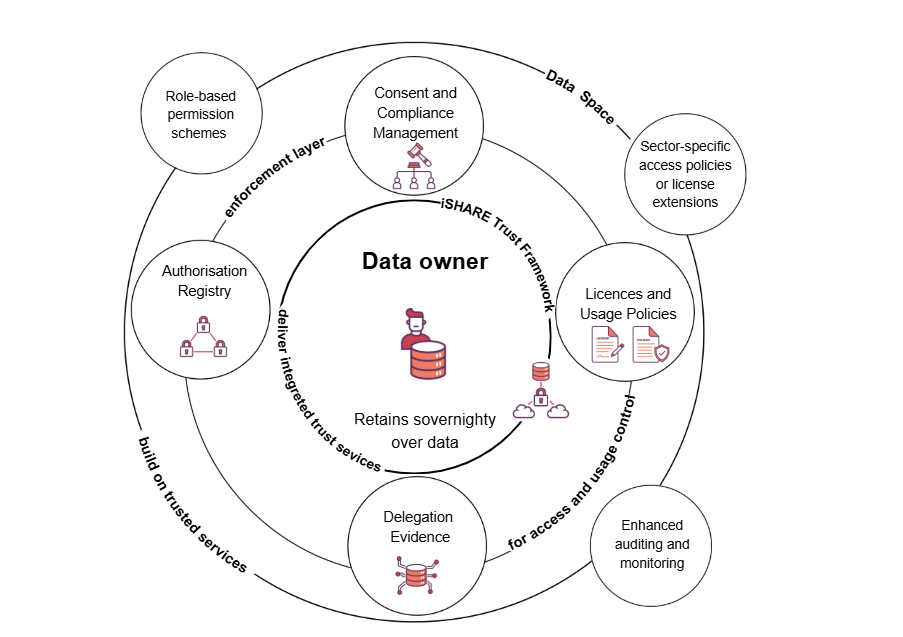
Figure 20. Participant-Controlled Trusted Data Access.
The **iSHARE Framework delivers several integrated trust services** that together form the enforcement layer for access and usage control.
## 1. Authorisation Registry
In the iSHARE Trust Framework, a data rights holder (or entitled party) is a legal person or entity that holds legitimate rights to access, use, or control data or data services provided by a Service Provider. Executing this right, a data rights holder needs to record [delegation evidence](https://framework.ishare.eu/detailed-descriptions/technical/structure-of-delegation-evidence). Within this evidence, a policy states who receives the rights, which data or services they cover, which actions are permitted, under which conditions and licences, and for how long. When the Service Consumer requests access, the Service Provider obtains this policy as signed delegation evidence, checks it, and grants or denies access accordingly. Because the evidence is signed and the parties are verified, a Service Provider can act on a delegation between parties it has never dealt with before.
**The Data Rights holder always decides how its delegations are managed:**
* **At a certified Authorisation Registry**. The AR stores delegations on behalf of Entitled Parties and issues delegation evidence, so they do not need to build their own authorisation tooling.
* **At its own Authorisation Registry**. An Entitled Party can operate an AR for its own delegations. It must meet the same functional requirements, but it issues evidence only for itself and acts as an adhering party rather than a certified AR.
* **Within the Service Provider**. A Service Provider can also verify delegation evidence that it holds internally, without consulting an external AR.
The Entitled Party makes known which AR holds its delegations, either directly, through its capabilities endpoint, or by registering it in the Participant Registry. It may use different ARs for different services or data spaces.
Data Rights Credentials. Delegations can also be issued as Data Rights Credentials. These are W3C Verifiable Credentials that carry the same delegation policy. The AR issues the credential on behalf of the Entitled Party. The Service Consumer holds it and presents it directly to the Service Provider, which verifies the credential and its revocation status and then evaluates the policy as it would any delegation evidence. This removes the need for a runtime call to the AR, supports offline and constrained environments, and makes delegations portable to credential-based ecosystems, with the same governance guarantees.
**Requirements for Authorisation Registries:**
* **The AR must have a clear agreement with the Entitled Party on how delegations are registered, updated and removed**. It must never process a revoked delegation as valid.
* **The AR may support standardised delegation creation requests** in line with iSHARE specifications, which keeps delegation management consistent across ecosystems.
* **Each delegation identifies the delegator and the delegate by their iSHARE-DID.** All evidence and credentials the AR issues are signed, so the Service Provider can verify their origin.
For more details on all the roles and their obligations within iSHARE, see[ here](https://framework.ishare.eu/detailed-descriptions/functional/functional-requirements-per-role#functionalrequirementsperrole-entitledpartyentitledparty).
## 2. Licences and Usage Policies
Licences define the legal and operational boundaries of data use and are applied to specific authorisations through the delegation evidence.
* The[ iSHARE Licenses Portal](https://licenses.ishare.eu/) provides a foundational set of **licences in four categories: general, country, industry and certification.**
* **Licences can be combined with logical operators**. For example, a delegation can require one licence and any one of several others, which allows combined geographical, sectoral or certification constraints.
* **Since all participants have signed the Terms of Use, they are legally obliged to comply with the licence conditions**. In case of any violation, participants can appeal to the Data Space Governance Body (DSGB).
* **Data spaces can reference these licences directly**, or extend the set with their own, provided they give the additions legal backing, for example by including them in the data space agreements.
## 3. Delegation Evidence
[Delegation evidence](https://framework.ishare.eu/detailed-descriptions/technical/structure-of-delegation-evidence) is the verifiable proof of rights granted. It is a signed JSON structure modelled on XACML 3.0, which lets participants exchange authorisations regardless of the policy languages they use internally.
* Each piece of evidence states:
* the delegator (policyIssuer) and the delegate (accessSubject)
* a validity period (notBefore, notOnOrAfter)
* one or more policy sets, each with its licences and maximum delegation depth
* the policies themselves: resource, actions, and a rule with its effect and any conditions
* Policy sets and policies only add rights, never restrict each other. They are evaluated so that a single Permit is sufficient.
## 4. Consent and Compliance Management
The Framework gives data rights holders continuous control through management of consent: they can modify or withdraw a delegation at any time, and a withdrawal applies from the next verification onwards.
* Where personal data is involved, this mechanism complements, but does not replace, each participant's GDPR obligations. Every party sharing personal data needs its own legal basis, such as the data subject's consent.
* Adhering to the iSHARE technical specifications covers the technical security measures GDPR requires for exchanging personal data. The Framework provides Data Processing Agreement and Data Exchange Agreement templates for the contractual side.
* Data spaces can link these mechanisms to sector-specific regulatory requirements as part of their own compliance approach.
#### Access & usage policies in practise
Access and usage conditions agreed between organisations become machine-readable policies applied at runtime in five steps (variations apply due M2M or H2M communications, and the specific roles involved):
1. **Agree -** The parties agree on access and usage conditions. They rely on the iSHARE Terms of Use as a default, add data space agreements, and optionally make bilateral arrangements.
2. **Express** - The Entitled Party records those conditions as a delegation policy: the delegate, the resources, the actions, any conditions, the applicable licences, and the permitted delegation depth. The policy is registered at an Authorisation Registry, or kept by the Entitled Party itself. Authorisation Registries may accept standardised delegation creation requests.
3. **Request** - When a Service Consumer requests data, the Service Provider identifies the applicable Authorisation Registry. It may already know it, or it looks it up through the Entitled Party's /capabilities endpoint or the Participant Registry. It then obtains delegation evidence. Alternatively, the Service Consumer presents evidence or a Data Rights Credential it collected beforehand.
4. **Evaluate** - While the Authorisation Registry provides policies, the Service Provider evaluates the Entitled Party's policies against the request and returns signed delegation evidence. The Service Provider verifies the signature and the issuer's certification, checks the validity period, and confirms that the rules and conditions match the request.
5. **Enforce** - The Service Provider grants or refuses access based on that evidence. The licences included in the evidence govern any further use of the data, backed by the Terms of Use.
Because delegation evidence cannot be revoked once issued, it carries a short and specific validity period. Each new request is evaluated against the current state of the delegation.
#### Modularity with the ishare Trust Framework
The iSHARE Trust Framework purposely provides a generic approach to delegations and licences, allowing each data space to build on these trust services to define their:
* **Sector-specific access policies or licence extensions** - additional licences covering, for example, sector rules or certification requirements, with legal backing in the data space agreements.
* **Role-based permission schemes linked to Participation Management** - which actions each role recorded in the Participant Registry may request or delegate.
* **Guidance on the semantics of delegation and policy targets** - shared vocabularies for resource types, identifiers, attributes and actions, so a delegation means the same thing to every participant and Service Provider.
* **Enhanced auditing and monitoring** - logging of access decisions and any additional controls the data space requires to verify that granted rights and licence conditions are respected.
This modular design allows flexibility without compromising interoperability. By combining iSHARE-DID, delegations, licences and structured evidence, data spaces can balance participant control with ecosystem-wide trust. The result is a federated system in which access decisions are verifiable, usage rights are transparent and legally backed, and participants remain in control of their data.
{% hint style="info" %}
Access & Usage Policies Enforcement connects closely with other building blocks:
* **Identity & Attestation Management:** Verifies participants so access rules can be enforced.
* **Trust Framework:** Sets rules and standards to support policy enforcement.
* **Contractual Framework & Regulatory Compliance:** Ensures policies follow laws and contracts, including consent for personal data.
{% endhint %}
{% hint style="warning" %}
The guiding questions can help in the co-creation process and in defining this building block, so please see the next section.
{% endhint %}
---
# Agent Instructions
This documentation is published with GitBook. GitBook is the documentation platform designed so that both humans and AI agents can read, navigate, and reason over technical content effectively. Learn more at gitbook.com.
## Querying This Documentation
If you need additional information that is not directly available in this page, you can query the documentation by asking a question.
Perform an HTTP GET request on the following URL with the `ask` and `goal` query parameters:
```
GET https://template.ishare.eu/technical-building-blocks/data-sovereignty-and-trust/access-and-usage-policies-and-enforcement.md?ask=&goal=
```
`ask` is the immediate question: it should be specific, self-contained, and written in natural language.
`goal` is what the user is ultimately trying to achieve, the reason they need the answer. Sharing it helps GitBook give you a better, more relevant answer. A goal is most helpful when it describes the outcome the user wants rather than restating the question. For example, with `ask=how do I create an API token`, a goal like `automate deployments from our CI pipeline` lets GitBook tailor the answer to that use case.
The response will contain a direct answer to the question and relevant excerpts and sources from the documentation.
Use this mechanism when the answer is not explicitly present in the current page, you need clarification or additional context, or you want to retrieve related documentation sections.